Laboratory Manager Jobs

437 jobs found — updated daily

Fusion Energy and Light Isotope Science, Group Manager

Savannah River National LaboratoryAiken, SC
Onsite

About The Position

Savannah River National Laboratory (SRNL) is seeking an accomplished and collaborative Group Manager to lead the Fusion Energy and Isotope Science group within the newly formed Energy Sciences and Engineering (ESE) Division. This group is a founding member of the ESE Division and focuses on advancing SRNL's expertise in the fusion fuel cycle and light isotope science. With six decades of experience in areas like hydrogen isotopes, tritium, heavy water, deuterium production, and He-3 recovery, the group is applying this knowledge to the demands of commercial fusion energy, including closing the deuterium-tritium fuel cycle to meet power plant standards. They utilize a development pathway involving surrogates for early-stage work, followed by tritium validation. Beyond the fuel cycle, the group extends its expertise to other light isotopes crucial for fusion and national supply, such as helium-3, deuterium, heavy water, lithium-6, lithium-7, and boron-11. This work supports the DOE Office of Science Isotope R&D and Production program and meets the needs of medical, research, and industrial users. The Group Manager is responsible for maintaining the group's deep expertise, ensuring its connection to future fusion commercialization and isotope supply missions, and leading the group's people, research environment, and technical execution in alignment with strategic direction. This role also involves cultivating external partnerships with DOE program offices, fusion developers, industry, and universities. The position requires strong technical credibility in fuel cycle or isotope science, a proven ability to develop researchers, and sound judgment in prioritizing various research and development activities. Success is measured by the group's scientific impact, staff development, partnership strength, funding base, and operational/safety excellence.

Requirements

  • Ph.D. in nuclear engineering, chemistry, physics, materials science, or a closely related field (or equivalent combination of education and experience).
  • Significant progressive experience in fuel cycle or isotope research and research leadership, including direct management or mentorship of technical staff.
  • Minimum 7+ years of relevant experience.
  • Deep technical credibility in at least one core domain — hydrogen isotope and fuel cycle science, tritium processing, light isotope technologies and production, or high-radiation-environment operability — with the breadth to engage across adjacent domains.
  • Demonstrated commitment to safety in a research environment, including tritium and byproduct materials handling; experience in radiological settings is required.
  • Track record of developing technical talent and cultivating the next generation of research leaders.
  • Proven ability to work in matrix environments, partnering with peer leaders and sponsors to align direction and execute missions.
  • Excellent written and verbal communication skills; ability to represent the group credibly to sponsors, DOE leadership, external partners, and internal staff.
  • Ability to obtain and maintain a DOE Q-level security clearance as required.

Nice To Haves

  • Experience in a DOE national laboratory, federal research environment, or comparable mission-driven research organization.
  • Direct research or applied experience in fuel cycle technology development, tritium processing, hydrogen isotope separation, helium-3 recovery, heavy water/deuterium production and purification, lithium/boron isotope separation, or remote/robotic operations in high-radiation environments.
  • Familiarity with ITER, INFUSE, or other fusion public-private partnership programs, and awareness of the DOE Fusion Science and Technology Roadmap's core challenge areas.
  • Established relationships with relevant DOE Office of Science program offices (e.g., Fusion Energy Sciences and Isotope R&D and Production) and credibility in the national fusion and isotope research communities.
  • Experience building strategic partnerships with fusion developers, industry, universities, and other national laboratories, including cost-sharing or public-private partnership models.
  • Track record of growing a research portfolio and securing external funding, including competitive proposals and industry-sponsored work.
  • Experience contributing to or standing up a new group, program, facility, or research area within a larger organization.
  • Active DOE Q-level security clearance.
  • Active Document Classification Review Officer (DCRO) credentials.

Responsibilities

  • Recruit, develop, mentor, and retain a high-caliber technical staff.
  • Identify and grow the next generation of technical leaders within the group.
  • Reinforce the division's operating culture, values, and norms around scientific rigor, collaboration, psychological safety, inclusion, and accountability at the group level.
  • Set the day-to-day tone for how the group works together.
  • Create an environment where researchers are supported, developed, and enabled to do their best work.
  • Manage performance, allocate staff and resources across the group's project portfolio, and make sound personnel and investment decisions.
  • Foster a strong safety culture and ensure all group work — including tritium handling, byproduct materials handling, and other radiological research activities — is planned and executed safely and in full compliance with environmental, safety, health, quality, and security requirements.
  • Ensure appropriate handling of the chemical and mixed hazards associated with fuel cycle and blanket research — including beryllium, lead, lithium, fluorides, and hydrides — alongside radiological hazards such as tritium and activated materials, coordinating with the appropriate SRNL facilities and partners, including the Advanced Manufacturing Collaborative (AMC) , where fabrication and materials work is performed using surrogate materials.
  • Work with the ESE Division Director to translate division and SRNL strategic priorities into the group's technical portfolio and resource allocation.
  • Steward the quality, rigor, and reputation of the group's work across its core domains — hydrogen isotope and fuel cycle science, tritium processing and validation, light isotope technologies and production (e.g., helium-3 recovery, heavy water/deuterium production and purification, lithium/boron isotope separation), and high-radiation-environment operability.
  • Serve as a credible technical voice to sponsors, peers, and the external research community.
  • Coordinate with the fission community on joint challenges such as molten salts, tritium extraction, liquid metal systems, and other synergistic technologies.
  • Synergize tritium-materials interaction research with the fusion materials community, ensuring that functional materials for fuel cycle technologies are developed and tested through progressions with hydrogen isotopes to enable fuel cycle, blanket, and other fusion technologies.
  • Apply SRNL’s maturity-staged development pathway to fusion-relevant conditions — surrogate research (protium/deuterium) for rapid, low-cost development, followed by tritium research to validate concepts under the continuous, high-throughput, plasma-relevant regimes that distinguish the fusion fuel cycle.
  • Support isotope production missions by applying the group's separations, handling, and processing expertise to the recovery and supply of light isotopes (e.g., helium-3, deuterium) needed for fusion, defense, and other strategic applications.
  • Integrate modeling, analytical, and experimental methods to solve challenges such as tritium accountancy, integrated full-plant modeling, and digital-twin simulations.
  • Identify high-value opportunities that align with DOE mission needs (FES, ARPA-E, OTC, etc.) — including the fuel cycle challenge area named in the DOE Fusion Science and Technology Roadmap — SRNL strategic priorities, and the group's distinctive capabilities, and bring them forward to inform division and directorate strategy.
  • Ensure the group has the test infrastructure, equipment, talent, and partnerships needed to execute effectively and on time, while also sequencing capability investments along where the science is headed.
  • Cultivate strategic partnerships outside DOE — fusion developers, industry, universities, and other national laboratories — that strengthen the group's capabilities and expand its funding base and impact.
  • Grow the fusion fuel cycle capability as a national hub, bringing regional universities and private industry into cost-sharing partnerships that advance hydrogen isotope research, workforce development, and next-generation fuel cycle technology.
  • Collaborate with the fusion community and provide input on fusion regulations, fusion nonproliferation, and fusion codes and standards, as well as modeling and communication around tritium emissions and accident scenarios.
  • Lead and mentor staff in building and deepening these relationships, positioning the group as a credible, trusted partner to fusion developers, industry, and academia.
  • Work with partners in academia and industry to support workforce development efforts, including development of educational materials, support for seminars, and broader support of the fusion ecosystem created by FC-FIRE and other FIRE collaboratives and other collaboration mechanisms.
  • Advance SRNL's standing and visibility in fusion fuel cycle and isotope science through publications, presentations, and professional leadership.
  • Support the Division Director, SEI Program Office, and Directorate in engaging relevant DOE program offices (e.g., Fusion Energy Sciences, ARPA-E, OTC), translating those relationships into a healthy, diversified project portfolio.
  • Manage the group's budget, financial performance, and facility and infrastructure needs, including capital planning for fuel cycle test infrastructure.
  • Ensure delivery on scope, schedule, and budget.
  • Establish group-level metrics, reporting cadences, and accountability structures.
  • Track and communicate progress to the Division Director and SEI Program Office.
  • Work within the SRNL matrix structure to align group capabilities with program priorities, surfacing challenges and opportunities that should inform division and directorate strategic planning.

Stand Out From the Crowd

Upload your resume and get instant feedback on how well it matches this job.

Upload and Match Resume

What This Job Offers

Job Type

Full-time

Career Level

Manager

Education Level

Ph.D. or professional degree
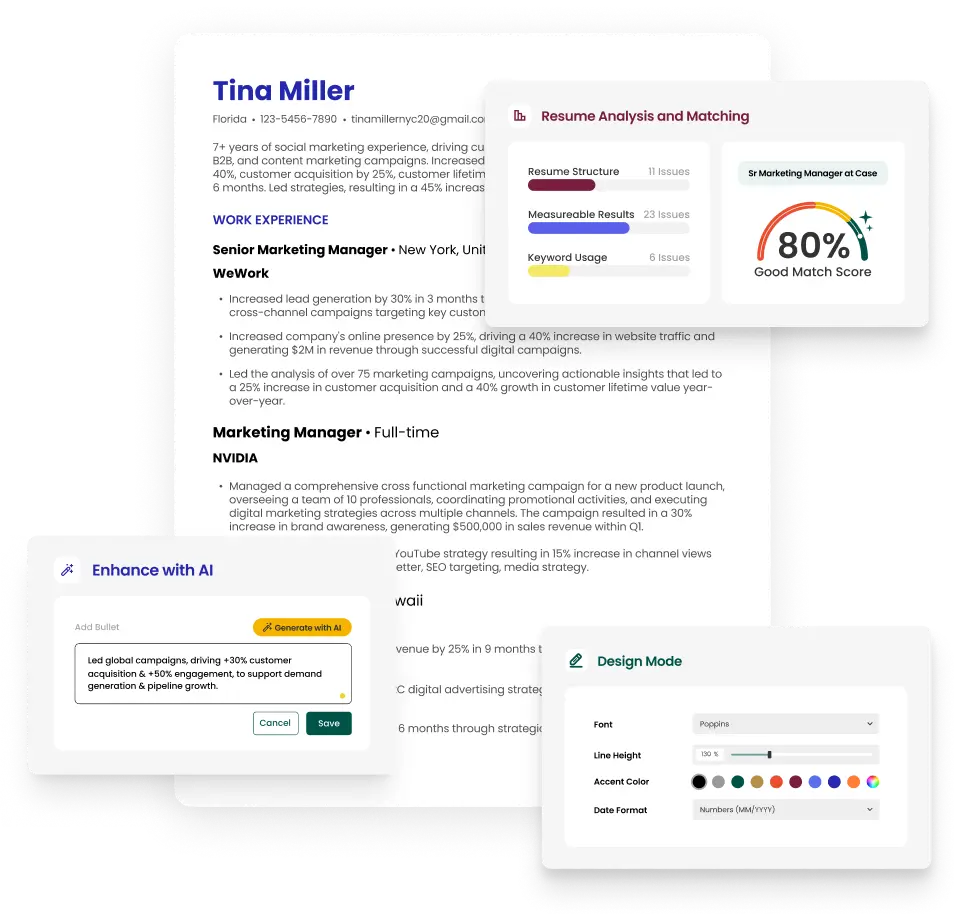
Build a Resume for Laboratory Manager

The resume builder that gets results.

  • Get clear feedback so you look as qualified as you are
  • Align your resume with the job to get further in the process, faster
  • Take the guesswork out of resume writing

Explore Related Job Searches

© 2026 Teal Labs, Inc
Privacy PolicyTerms of Service