Operations Research Analyst Jobs

199 jobs found — updated daily

Operations Research Analyst

CAPE•Washington, DC
•Onsite

About The Position

The Cost Assessment and Program Evaluation (CAPE) organization is seeking an Operations Research Analyst for its Tactical Air Forces Division (TACAIR). The analyst will lead and conduct analysis of future tactical-air capabilities and related force-structure decisions, including fighter and bomber forces, autonomous platforms, aircraft sensors, electromagnetic warfare, munitions, and operational concepts. The role applies rigorous warfighting simulations and quantitative analysis to develop clear, decision-ready recommendations for senior Department of War leaders. Candidates with data science, simulation modeling, or strong quantitative and coding experience are encouraged to apply. The analyst will lead joint studies, develop experimental designs and operational warfighting vignettes, organize complex datasets, contribute to combat simulation models, and analyze model outputs. The role also evaluates military capability portfolios and tradespaces, works with operators and technical specialists to ensure models reflect operational realities and policy constraints, and communicates findings through visualizations, written products, and briefings to the Secretary and Deputy Secretary of War. The position is a permanent, full-time Schedule B Excepted Service appointment at the GS-13, GS-14, or GS-15 level. It is located at the Pentagon in Arlington, Virginia. The employee must be able to obtain and maintain a Top Secret or Top Secret/SCI security clearance. Relocation expenses are not reimbursed.

Requirements

  • A degree in operations research from an accredited college or university, or at least 24 semester hours in a combination of operations research, mathematics, probability, statistics, mathematical logic, science, or subject-matter courses requiring substantial competence in college-level mathematics or statistics; at least 3 of the 24 semester hours must be in calculus.
  • Mastery of mathematical reasoning and quantitative methods involving operations research, statistics, probability, data science, and combat modeling.
  • Experience applying quantitative analytics to complex defense problems, developing robust Designs of Experiments, and extracting defensible insights from high-dimensional, uncertain datasets.
  • Proficiency writing, modifying, and executing analytical code in scientific programming languages such as Python, R, or C++, and working with mission-level simulation environments such as AFSIM.
  • Practical experience applying statistical methods to complex model outputs and determining defensible analytical results.
  • Ability to define and evaluate complex tradespaces for military capabilities and force structures.
  • Ability to evaluate tactical-air capabilities and force structures, including fighter and bomber platforms, autonomous systems, collaborative combat aircraft, sensors, electronic warfare, and advanced munitions, and assess mission dependencies, force multipliers, and cost-effective substitutes.
  • Ability to review strategic guidance such as the National Defense Strategy and Defense Planning Guidance and evaluate programmatic and force-structure implications.
  • Ability to collaborate with military operators and aviators, laboratory research scientists, intelligence analysts, defense policy experts, and contractor technical teams to translate operational concepts and technological advancements into representative analytical models.
  • Ability to build interagency networks, reach consensus across differing analytical perspectives, and navigate organizational complexity.
  • Ability to translate quantitative findings, modeling methodologies, simulation outputs, and uncertainty into concise, plain-language insights.
  • Proficiency producing executive decision memos, white papers, methodology reports, and briefings, and delivering oral briefings directly to senior executive leaders.
  • Ability to advocate for analytical integrity, persuasively articulate facts and trade-offs in high-stakes environments, and communicate recommendations with minimal advance notice.
  • At least one year (12 months equivalent to 40 hours per week) of experience demonstrating the duties and competencies for the applicable GS level.
  • For GS-13: Experience extracting and organizing raw program and/or cost data under general direction, conducting basic mathematical analysis of program information, assisting with collection and development and implementation of program- and/or cost-related information, and communicating effectively with senior officials and other stakeholders.
  • For GS-14: Experience with a broad range of operations research assignments involving unique problems, creativity, innovative quantitative techniques, advanced approaches, or new technologies; using scientific inquiry and independently developing mathematical models and computer programs to evaluate, interpret, and analyze program and/or cost data.
  • For GS-15: Experience leading teams, performing complex statistical analyses, evaluating large and complex military programs using quantitative methods, analyzing complex problems without defined goals and outcomes, providing expert consultation to agency senior leaders, and communicating effectively with senior officials and other stakeholders.
  • Must be able to obtain and maintain a Top Secret or Top Secret/SCI security clearance.
  • Must be a U.S. citizen.

Nice To Haves

  • Experience employing AI/ML techniques in problem solving.
  • Experience in data science, simulation models, or analytics paired with strong quantitative and coding skills.

Responsibilities

  • Lead and execute high-impact joint studies.
  • Develop Designs of Experiments and operational warfighting vignettes to measure uncertainty across complex datasets.
  • Collect, assess, and structure disparate datasets.
  • Lead and contribute to coding, modifying, and executing combat simulation models, such as AFSIM and Python-based models.
  • Conduct rigorous statistical analyses of model outputs to identify mission insights.
  • Partner with contractor teams to design automated data pipelines and analytical processing workflows.
  • Define capability portfolios and tradespaces for current and emerging aircraft capabilities, including sensors, electronic warfare, and autonomy.
  • Use joint capability insights to evaluate mission dependencies and cost-effective substitutes.
  • Collaborate with military aviators and operators, laboratory scientists, intelligence analysts, and policy specialists to ensure analytical models reflect tactical options, emerging technologies, and national defense policy constraints.
  • Translate simulation outputs and quantitative trade studies into decision-ready visualizations, summaries, and briefings for the Secretary and Deputy Secretary of War.
  • Review strategic guidance and evaluate its programmatic and force-structure implications.
  • Provide objective, fact-based recommendations for major portfolio decisions.
  • Communicate analytical findings and recommendations to senior officials and other stakeholders through memos, white papers, methodology reports, briefings, and oral presentations.

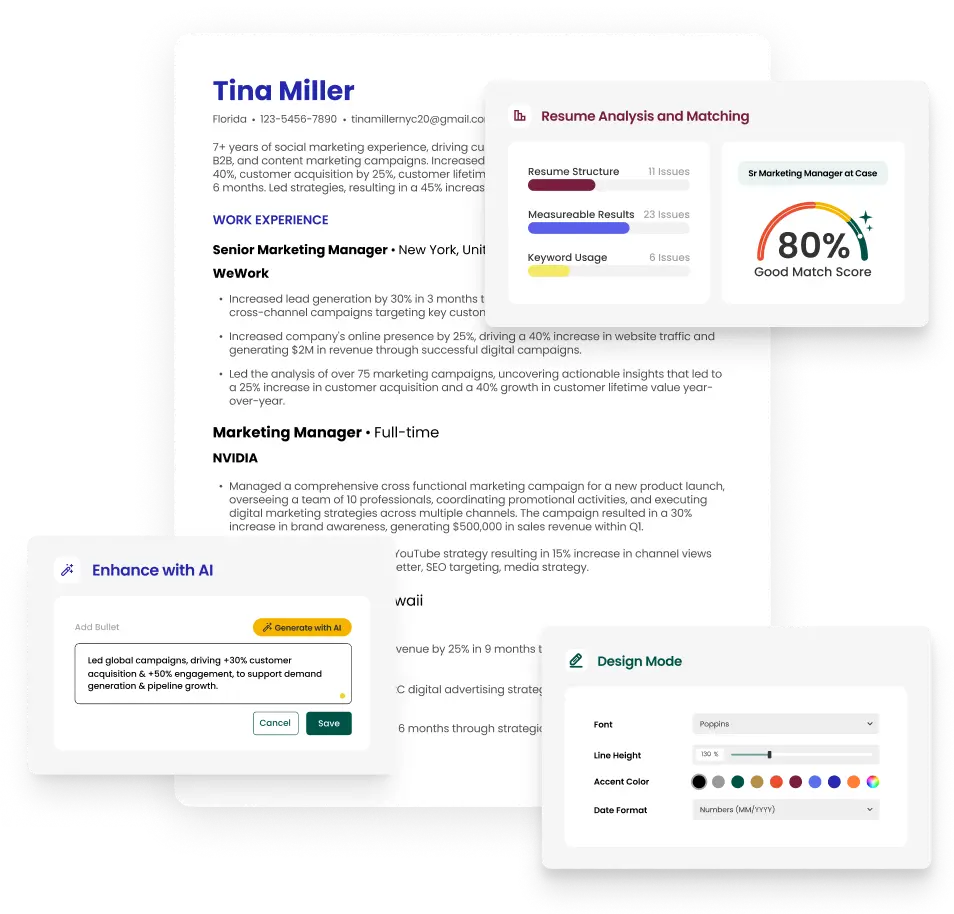
Build a Resume for Operations Research Analyst

The resume builder that gets results.

  • Get clear feedback so you look as qualified as you are
  • Align your resume with the job to get further in the process, faster
  • Take the guesswork out of resume writing

Explore Related Job Searches

© 2026 Teal Labs, Inc
Privacy PolicyTerms of Service