Engineer Jobs

10,000 jobs found — updated daily

About The Position

Matter is building an AI-native autonomy stack for physical manufacturing and operates factories as controlled learning environments, collecting production data to train and validate AI systems on real hardware. The AI Research Engineer will lead model training and adaptation for MatterOS, covering pre-training data, domain-specific fine-tuning, and post-training alignment for manufacturing tasks. The role spans the model development lifecycle: curating manufacturing data and designing synthetic data pipelines; adapting general-purpose vision-language models (VLMs), vision-language-action models (VLAs), and language models (LLMs) for factory-specific tasks; and building evaluation frameworks to define and measure production-ready performance. The engineer will collaborate with the VLA Research Scientist and AI Infrastructure Engineer to connect simulation, real factory data, training, and deployed models.

Requirements

  • Strong background in machine learning research, with practical experience training large models such as VLMs, LLMs, or robot policies.
  • Hands-on experience with pre-training data pipelines, synthetic data generation, or large-scale multimodal training.
  • Familiarity with fine-tuning and alignment techniques, including LoRA, RLHF, DPO, and instruction tuning.
  • Proficiency in PyTorch.
  • Experience with NVIDIA Isaac Sim, MuJoCo, or physics-based simulation engines.
  • Ability to design evaluation frameworks that measure task-specific real-world performance beyond standard benchmarks.
  • Systems thinking and understanding that training data quality and domain alignment are especially important in constrained physical applications.

Nice To Haves

  • PhD or graduate degree in machine learning, robotics, or a related field.
  • Experience with embodied AI, robot learning, or sim-to-real transfer.
  • Background in industrial or manufacturing domains.
  • Experience with distributed training on GPU clusters, including SLURM, DeepSpeed, or FSDP.

Responsibilities

  • Design and manage synthetic data generation pipelines using physics simulation, including domain randomization, procedural scene generation, and sim-to-real transfer validation.
  • Curate and annotate manufacturing training data, including CAD data, process plans, equipment programs, assembly sequences, sensor streams, and quality inspection records.
  • Fine-tune and adapt pre-trained VLMs, VLAs, and LLMs for manufacturing-specific tasks such as DFM co-pilot, fault detection, assembly instruction generation, and robotic policy learning.
  • Implement post-training alignment methods such as RLHF, DPO, or preference optimization to align model behavior with manufacturing task success criteria.
  • Build domain-specific evaluation benchmarks for manipulation accuracy, instruction-following fidelity, process compliance, and failure mode detection.
  • Collaborate with the VLA Research Scientist and AI Infrastructure Engineer to close the training loop between simulation, real factory data, and deployed models.

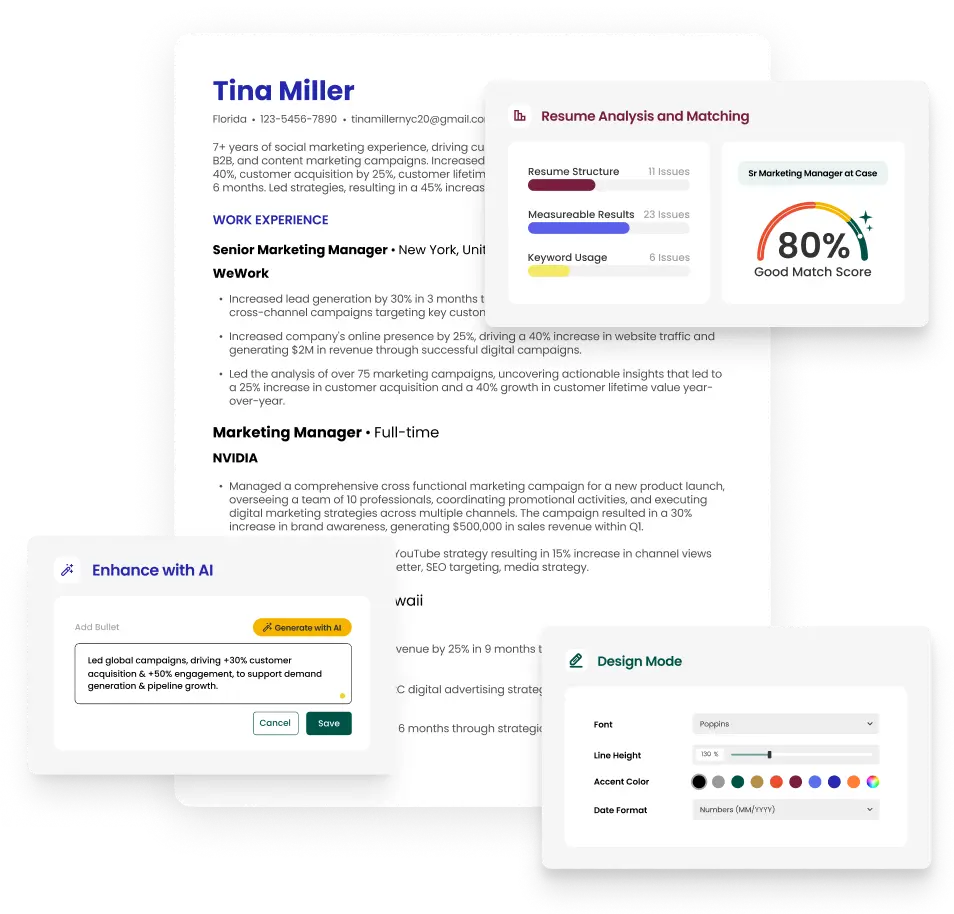
Build a Resume for Engineer

The resume builder that gets results.

  • Get clear feedback so you look as qualified as you are
  • Align your resume with the job to get further in the process, faster
  • Take the guesswork out of resume writing

Explore Related Job Searches

© 2026 Teal Labs, Inc
Privacy PolicyTerms of Service