Deputy Commissioner Jobs

58 jobs found — updated daily

About The Position

The Director, Community Engagement and Capacity-Building, in the Office of the Executive Deputy Commissioner, works within the New York City Department of Health and Mental Hygiene’s Division of Mental Hygiene. The Division oversees policy, programs, and services related to mental health, alcohol and drug use prevention, care and treatment, and developmental delays and disabilities. The role leads community engagement, research, and capacity-building efforts to inform suicide prevention planning and practice, with attention to health equity and populations disproportionately affected by suicide. The Director coordinates community needs assessments and other information-gathering activities, integrates community-generated knowledge with surveillance and research, and translates findings into recommendations for prevention policy, programs, and services. The position leads the Office’s Lived Expertise Advisory Board, develops partnerships across sectors, manages and evaluates initiatives, and supervises assigned staff. The role supports evidence-informed, culturally responsive, equitable, and trauma-informed approaches to suicide prevention. The position is associated with the City Research Scientist title. Appointments are subject to a minimum one-year probationary period. Depending on the position, employees may be able to work from home up to two days per week.

Requirements

  • For appointment at City Research Scientist Assignment Level II or above, candidates must meet one of the specified education and experience pathways: a doctorate in an appropriate physical, biological, environmental, or social science field plus one year of responsible supervisory, administrative, or research experience; a master's degree in an appropriate field plus three years of responsible full-time research experience; or equivalent education and/or experience.
  • Candidates qualifying through the stated education and experience equivalency must have at least a master's degree in an appropriate field and at least two years of the described experience.
  • Two years as a City Research Scientist Level I may substitute for the experience required under the doctorate or master's pathways.
  • Appointments are subject to a minimum probationary period of one year.

Nice To Haves

  • Experience implementing suicide prevention programming, training, and capacity-building efforts.
  • Experience leading community engagement, coalition-building, capacity-building, or public health initiatives.
  • Experience working with communities and populations disproportionately affected by suicide or other adverse health outcomes.
  • Experience engaging individuals with lived expertise in program or policy development.
  • Experience supervising staff and managing complex, cross-sector initiatives.
  • Experience developing or coordinating training, technical assistance, or community capacity-building initiatives.
  • Knowledge of behavioral health, trauma-informed practice, and health equity.

Responsibilities

  • Lead efforts to gather and assess information from communities, organizations, and stakeholders to identify suicide prevention needs, gaps, assets, and emerging concerns.
  • Coordinate community needs assessments, listening activities, surveys, focus groups, and other information-gathering approaches, particularly to understand populations and settings disproportionately affected by suicide.
  • Integrate community-generated information with epidemiologic data, surveillance findings, and available research evidence in collaboration with Office research and subject matter experts.
  • Identify trends, disparities, service gaps, and intervention opportunities, and translate findings into recommendations for prevention planning and practice.
  • Ensure information-gathering approaches reflect community context, health equity, and populations that may be underrepresented in traditional data sources.
  • Develop and coordinate community capacity-building strategies based on identified needs, surveillance, research evidence, and community priorities.
  • Coordinate access to evidence-informed training, technical assistance, tools, and other resources responsive to capacity gaps.
  • Work with subject matter experts and community partners to implement and adapt evidence-informed suicide prevention practices across diverse settings.
  • Monitor implementation and emerging evidence to identify opportunities to strengthen or modify community-based approaches.
  • Promote culturally responsive and equitable prevention approaches that account for differences in risk, protective factors, access to resources, and community context.
  • Lead the Office’s Lived Expertise Advisory Board and related engagement activities to incorporate lived experience and community knowledge into suicide prevention planning.
  • Develop processes for gathering, synthesizing, and applying lived expertise to research priorities, program design, policy recommendations, and prevention strategies.
  • Ensure people with lived expertise and communities disproportionately affected by suicide have meaningful opportunities to shape Office priorities and initiatives.
  • Promote trauma-informed, equitable, and culturally responsive approaches to engaging with and interpreting community knowledge.
  • Translate community assessment, surveillance, research, and stakeholder-engagement findings into recommendations for policy, programs, services, and prevention planning.
  • Collaborate with Office leadership, Department bureaus, City agencies, and external partners to apply evidence and community-informed findings to citywide suicide prevention initiatives.
  • Identify opportunities to adapt or scale prevention strategies based on evidence, population needs, and implementation experience.
  • Prepare analyses, recommendations, and briefings for Office leadership that synthesize research, surveillance data, community perspectives, and health equity considerations.
  • Develop and maintain partnerships with community organizations, healthcare systems, academic institutions, schools, advocacy organizations, and other stakeholders.
  • Coordinate multidisciplinary initiatives combining community knowledge, public health surveillance, research, and implementation expertise.
  • Facilitate information-sharing and collaboration among partners to identify emerging issues, research needs, and opportunities for coordinated prevention action.
  • Represent the Office in community, professional, academic, and public forums, communicating evidence and findings accessibly to diverse audiences.
  • Develop work plans, implementation strategies, and performance measures for community engagement and capacity-building initiatives.
  • Establish processes to monitor activities, assess implementation, and identify opportunities for improvement.
  • Coordinate collection and review of qualitative and quantitative information to assess reach, effectiveness, equity, and community responsiveness.
  • Use monitoring and evaluation findings to recommend adjustments to programs, partnerships, and resource allocation.
  • Supervise assigned staff and provide direction and oversight for community research, engagement, and capacity-building activities.

Benefits

  • Potential eligibility for federal or state loan forgiveness and repayment assistance programs.
  • Premium-free health insurance plan; the posting states it saves employees over $10,000 annually according to a 2024 assessment.
  • Additional health, fitness, and financial benefits may be available based on the position’s associated union or benefit fund.
  • Public-sector defined-benefit pension plan with steady monthly payments in retirement.
  • Tax-deferred savings program.
  • Worksite Wellness Program.
  • Depending on the position, the ability to work from home up to two days during the week.
  • Job security compared with private-sector employment.

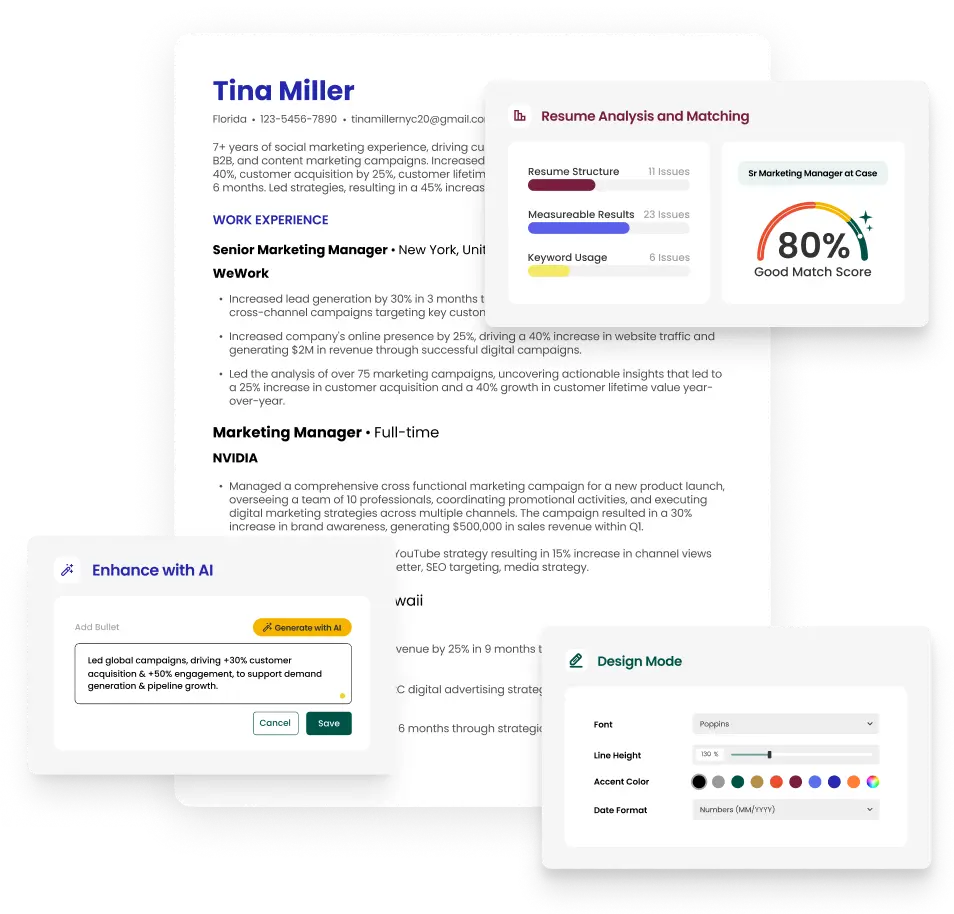
Build a Resume for Deputy Commissioner

The resume builder that gets results.

  • Get clear feedback so you look as qualified as you are
  • Align your resume with the job to get further in the process, faster
  • Take the guesswork out of resume writing

Explore Related Job Searches

Frequently Asked Questions

Common questions about Deputy Commissioner careers and jobs.

Based on current job postings on Teal, the average Deputy Commissioner salary in the US is approximately $184,000 per year, with a typical range of $120,000 to $250,000.
© 2026 Teal Labs, Inc
Privacy PolicyTerms of Service