Architect Jobs

10,000 jobs found — updated daily

Principal Architect

Microsoft•Redmond, WA
•$142,800 - $304,200

About The Position

Microsoft Security is seeking a Principal Architect to define the architectural vision and long-term technical strategy for the Perception Platform, an advanced agentic AI platform for security and IT teams. The role focuses on enabling AI capabilities to operate securely, reliably, and at scale across multiple tenants and diverse enterprise environments. The Principal Architect provides technical leadership across generative AI, retrieval-augmented generation (RAG), memory, reasoning, agentic and multi-agent systems, identity and authorization, AI safety, distributed cloud systems, and platform infrastructure. The role defines reference architectures, principles, system boundaries, integration patterns, and reusable abstractions that address varied tenant configurations, infrastructure dependencies, security boundaries, compliance requirements, and deployment models. The architect drives convergence across teams and services, reduces tenant-specific coupling, and guides the evolution of production systems toward modular, configurable, reusable, secure, and scalable platform architectures. This includes defining patterns for identity, compute, storage, networking, configuration, deployment, observability, reliability, security, data, and AI execution. The role partners with engineering, product, architecture, security, privacy, compliance, and other platform organizations to turn complex requirements into scalable designs and long-term technology investments, and mentors senior engineers and architects.

Requirements

  • Bachelor's degree in Computer Science, Engineering, or a related technical field and at least 6 years of technical engineering experience designing and building complex software systems, distributed systems, or cloud platforms, or equivalent experience.
  • Ability to meet Microsoft, customer, and/or government security screening requirements, including passing the Microsoft Cloud Background Check upon hire or transfer and every two years thereafter.

Nice To Haves

  • Master's degree in Computer Science, Engineering, or a related technical field and at least 8 years of relevant technical engineering experience; or a bachelor's degree in a related field and at least 12 years of relevant experience; or equivalent experience.
  • Significant experience architecting production-scale distributed systems, multi-tenant services, enterprise platforms, cloud infrastructure, or AI-powered systems.
  • Experience establishing reference architectures, architectural principles, platform standards, system boundaries, and reusable patterns across multiple teams or organizations.
  • Experience designing strong tenant isolation across identity, authorization, data, compute, configuration, networking, and operations.
  • Experience defining production architecture for generative AI, including model orchestration, RAG, retrieval, memory, context management, reasoning, tool use, evaluation, grounding, and safety.
  • Experience architecting agentic or multi-agent systems, including planning, tool invocation, orchestration, memory, state, delegation, communication, policy enforcement, and bounded execution.
  • Deep understanding of identity, authentication, authorization, RBAC, least privilege, delegated authorization, workload and service identities, agent identities, and multi-tenant security boundaries.
  • Experience defining secure patterns for integrating AI systems with enterprise data, services, APIs, plugins, tools, and distributed execution environments.
  • Experience designing RAG architectures, including ingestion, indexing, embeddings, retrieval, re-ranking, provenance, grounding, authorization-aware retrieval, and evaluation.
  • Experience with cloud architecture, Kubernetes, containerized services, compute, storage, networking, service-to-service communication, configuration management, Infrastructure as Code, automated deployment, and CI/CD.
  • Experience architecting highly available and resilient services, including dependency failure, capacity constraints, throttling, graceful degradation, fault isolation, recovery, and disaster scenarios.
  • Experience defining observability, diagnostics, health monitoring, deployment validation, and operational architecture for large-scale distributed systems.
  • Experience identifying architectural coupling and evolving production systems toward modular, reusable, configurable, extensible, and scalable platform architectures.
  • Experience evaluating tradeoffs involving security, reliability, scalability, performance, cost, operational complexity, developer productivity, and time-to-market.
  • Ability to influence technical strategy and align engineering organizations around shared architectural direction without direct organizational authority.
  • Strong technical communication skills, including explaining complex architectures and tradeoffs to engineers, architects, product leaders, security experts, and senior leadership.
  • Ability to mentor senior technical leaders and raise architectural and engineering capabilities across an organization.

Responsibilities

  • Define the architectural vision and long-term technical strategy for the Perception Platform and establish reference architectures for production-grade AI capabilities.
  • Define scalable multi-tenant architectures and patterns for tenant isolation, identity, authorization, configuration, data protection, deployment, sovereignty, compliance, and operations.
  • Establish architectural principles, system boundaries, and reusable abstractions across platform infrastructure and AI capabilities to reduce fragmentation and tenant-specific coupling.
  • Drive architectural convergence across distributed systems and engineering teams through shared patterns, interfaces, contracts, and platform capabilities.
  • Define automation-first architecture for tenant provisioning, configuration, deployment, validation, upgrades, migrations, lifecycle management, and operational readiness.
  • Design architectures that accommodate variation in tenant configuration, service availability, infrastructure, networking, identity, security, data residency, sovereignty, and compliance.
  • Establish architecture for scalable RAG systems, including ingestion, indexing, retrieval, context construction, grounding, provenance, evaluation, governance, and authorization boundaries.
  • Define architectures and principles for agentic and multi-agent systems, including planning, reasoning, tool use, delegation, collaboration, memory, human oversight, failure recovery, and bounded execution.
  • Define identity, authentication, and authorization architecture for AI systems, including user, workload, service, and agent identities, RBAC, delegated authorization, least privilege, and secure context propagation.
  • Establish guardrails to preserve tenant isolation and authorization across retrieval, reasoning, planning, memory, and execution, and validate agent plans and tool interactions against applicable policies.
  • Define AI safety, security, and trust-boundary architecture, including defenses against prompt injection, unsafe tool invocation, cross-tenant exposure, untrusted content, and privacy or compliance violations.
  • Establish architecture for AI memory and state management, including isolation, authorization-aware retrieval, lifecycle, retention, deletion, provenance, privacy, and compliance.
  • Define architectural expectations for automated validation, testing, and conformance across correctness, isolation, authorization, security, reliability, deployment readiness, and compatibility.
  • Establish observability, monitoring, diagnostics, and operational architecture for platform health and troubleshooting distributed services and AI workflows.
  • Define strategies for resilience, scale, capacity, dependency management, graceful degradation, disaster recovery, and failure isolation across globally distributed services.
  • Identify systemic architectural dependencies and guide production systems toward modular, configurable, reusable, secure, and scalable architectures with practical migration strategies.
  • Lead architecture reviews and advise on build-versus-reuse decisions, service boundaries, data and API contracts, technology choices, dependencies, and tradeoffs.
  • Partner with engineering and product leadership to translate customer and business needs into architectural roadmaps and strategic technology investments.
  • Influence architecture across Microsoft Security and related platform organizations, aligning direction and encouraging reusable patterns while preventing duplication and fragmentation.
  • Mentor senior engineers and architects and promote rigorous design, technical depth, engineering excellence, and long-term systems thinking.

Career Resources

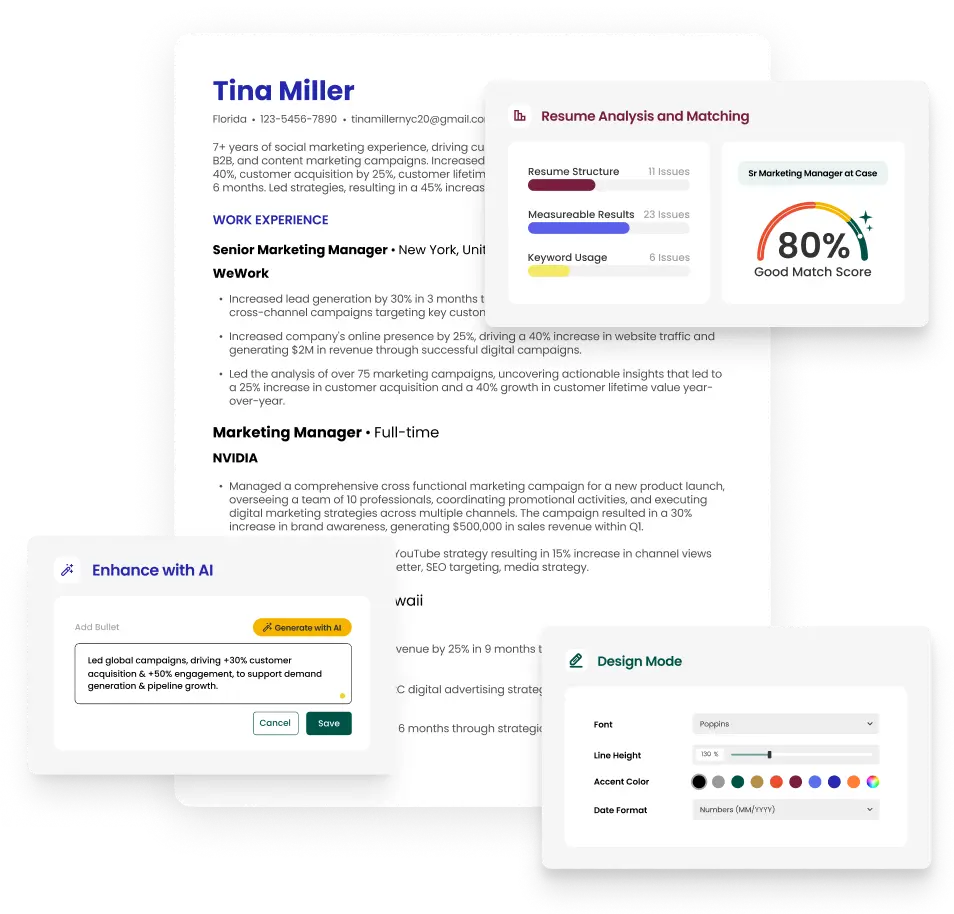
Build a Resume for Architect

The resume builder that gets results.

  • Get clear feedback so you look as qualified as you are
  • Align your resume with the job to get further in the process, faster
  • Take the guesswork out of resume writing

Explore Related Job Searches

© 2026 Teal Labs, Inc
Privacy PolicyTerms of Service