Site Reliability Engineer Jobs

1,079 jobs found — updated daily

Director, Site Reliability Engineer

AssetMark Financial Holdings•Charlotte, NC
•Hybrid

About The Position

AssetMark is seeking a strategic, technically strong Director of Service/Site Reliability Engineering and Observability to lead reliability, monitoring, performance, and operational excellence for an enterprise environment hosted exclusively on Microsoft Azure. The director will own the SRE and observability strategy and operating model across Azure IaaS and native Azure managed services, spanning real-time applications, APIs, virtual machines, containers, serverless workloads, integrations, databases, messaging platforms, data pipelines, and batch-processing systems. This role combines enterprise leadership with Azure architecture knowledge, application-development experience, production troubleshooting expertise, and the ability to establish scalable practices that improve availability, performance, resilience, security, and customer experience. The director will partner with application development, cloud infrastructure, security, architecture, data, service management, and business teams to ensure Azure-hosted systems are observable, supportable, secure, resilient, and production-ready. Candidates must be able to accommodate a hybrid work schedule and be located close to AssetMark’s Charlotte, NC office. The director will lead and develop SRE, observability, production engineering, and monitoring professionals; establish team structure, ownership boundaries, escalation paths, career development, and engineering standards; and communicate reliability posture, operational risks, incidents, investment needs, and improvement plans to senior leaders. Success includes improving the reliability and observability of critical Azure services, speeding incident detection and resolution, reducing alert noise and operational risk, increasing batch-processing success, and building a mature, high-performing SRE organization. The base salary range is $180,000–$219,000, with eligibility for additional variable incentive compensation and competitive benefits. Candidates must be legally authorized to work in the United States; visa sponsorship is not available.

Requirements

  • At least 7 years of experience in an enterprise technology environment, including experience supporting production systems at scale.
  • Progressive experience leading SRE, observability, production engineering, monitoring, platform operations, or related functions.
  • Demonstrated success developing and implementing an enterprise observability strategy.
  • Experience operating and supporting workloads hosted on both Azure IaaS and native Azure services.
  • Strong experience with real-time monitoring, alerting, logging, dashboards, distributed tracing, event management, and service-health reporting.
  • Experience with Azure observability capabilities such as Azure Monitor, Log Analytics, Application Insights, Azure Managed Grafana, Activity Logs, Resource Health, or comparable technologies.
  • Experience supporting highly available, customer-facing, transaction-processing, or business-critical systems.
  • Strong understanding of application architecture, software-development practices, APIs, databases, integrations, messaging, and distributed systems.
  • Demonstrated ability to troubleshoot complex production issues across application, Azure platform, infrastructure, data, network, identity, and third-party dependency layers.
  • Direct experience with batch systems, scheduled processing, data pipelines, job dependencies, recovery procedures, and time-sensitive enterprise workloads.
  • Experience defining and managing SLIs, SLOs, SLAs, error budgets, availability targets, performance objectives, and operational metrics.
  • Strong background in incident command, major incident management, root-cause analysis, problem management, and continuous improvement.
  • Experience driving automation, self-service, runbook development, infrastructure as code, CI/CD improvements, or automated remediation.
  • Demonstrated ability to lead cross-functional initiatives and influence teams without direct authority.
  • Excellent written, verbal, analytical, and executive-communication skills.
  • Ability to accommodate a hybrid work schedule and be close to AssetMark’s Charlotte, NC office.
  • Legal authorization to work in the United States; visa sponsorship is not available.

Nice To Haves

  • Experience leading SRE or observability functions in a large-scale Microsoft Azure enterprise environment.
  • Experience with Azure landing zones, management groups, subscriptions, resource groups, Azure Policy, role-based access control, managed identities, networking, private endpoints, and shared platform services.
  • Familiarity with Azure Kubernetes Service, App Service, Functions, Service Bus, Event Grid, Logic Apps, Azure Storage, Azure SQL, Cosmos DB, Data Factory, Synapse, and related managed services.
  • Experience with Azure DevOps, GitHub Actions, Bicep, ARM templates, Terraform, containers, Kubernetes, CI/CD, and cloud-native deployment practices.
  • Familiarity with Splunk, Datadog, Dynatrace, New Relic, Grafana, Prometheus, OpenTelemetry, Elastic, or comparable observability platforms.
  • Knowledge of performance engineering, capacity management, high-availability architecture, disaster recovery, and resilience engineering.
  • Experience modernizing legacy monitoring environments or consolidating multiple observability platforms within Azure.
  • Experience managing technology budgets, vendor relationships, licensing, and platform strategy.
  • Familiarity with ITIL, SRE, DevOps, Agile, or other service-management and engineering frameworks.
  • Bachelor’s degree in computer science, information systems, engineering, or a related field, or equivalent professional experience.

Responsibilities

  • Define and execute an enterprise-wide SRE and observability strategy aligned with business priorities, technology objectives, and risk-management requirements.
  • Establish standards for metrics, logs, traces, events, dashboards, alerting, instrumentation, service ownership, telemetry quality, and data retention.
  • Develop a multi-year roadmap for Azure observability platforms, reliability engineering, automation, resilience, and operational maturity.
  • Define SLIs, SLOs, SLAs, error budgets, availability targets, latency objectives, and performance standards.
  • Establish operational-readiness requirements for applications, releases, infrastructure changes, Azure services, and third-party integrations.
  • Evaluate and govern observability platforms, tools, vendors, integrations, licensing, access, security, and operating costs.
  • Lead reliability and observability practices across Azure IaaS and native Azure services, and promote consistent practices across subscriptions, resource groups, environments, and service teams.
  • Establish Azure monitoring and telemetry standards, including diagnostic settings, centralized logging, metric collection, distributed tracing, correlation IDs, alert routing, dashboards, and telemetry retention.
  • Partner with cloud platform and architecture teams to improve Azure subscriptions, management groups, networking, identity, access controls, policies, and shared services.
  • Ensure Azure-hosted services meet availability, scalability, recoverability, monitoring, and operational-support requirements.
  • Lead real-time monitoring for business-critical applications, customer-facing services, APIs, infrastructure, databases, networks, messaging systems, and integrations.
  • Improve alert quality and actionability while reducing alert fatigue and unnecessary escalations; create executive, operational, and engineering dashboards.
  • Establish on-call, escalation, incident response, major incident management, and service-restoration practices.
  • Participate in root-cause analysis, problem management, post-incident reviews, and corrective-action tracking; drive proactive detection of reliability, capacity, performance, security, and availability risks.
  • Develop runbooks, playbooks, automated remediation, self-healing capabilities, and other mechanisms that reduce manual intervention and accelerate recovery.
  • Use Azure telemetry and operational data to identify trends, dependencies, recurring failures, and continuous-improvement opportunities.
  • Partner with application-development teams to improve instrumentation, diagnosability, performance, resilience, and production supportability.
  • Provide technical leadership during complex production issues involving application code, APIs, microservices, middleware, databases, queues, files, integrations, Azure services, and infrastructure.
  • Apply software-development knowledge to review application behavior, identify failure patterns, and support code-level troubleshooting.
  • Promote observability throughout the software-development lifecycle, including design, development, testing, deployment, and post-release validation.
  • Support performance engineering, profiling, capacity planning, release readiness, and production validation; troubleshoot across Azure compute, networking, identity, storage, messaging, databases, runtimes, and dependencies.
  • Use telemetry and operational data to distinguish application defects, infrastructure issues, data problems, configuration errors, and dependency failures.
  • Ensure reliable operation and monitoring of scheduled jobs, batch processes, data pipelines, file transfers, reporting processes, and other time-sensitive Azure workloads.
  • Establish visibility into batch dependencies, job duration, success and failure rates, late starts, missed schedules, data-quality issues, retries, restarts, and downstream impacts.
  • Define recovery, restart, reconciliation, and escalation procedures for failed or delayed batch processes.
  • Monitor and improve Azure-based batch and data services, and partner with application, data, and business teams to protect service levels and timely delivery of critical outputs.
  • Improve availability, scalability, recoverability, and fault tolerance across Azure-hosted enterprise platforms.
  • Lead capacity planning, performance monitoring, resilience testing, disaster-recovery readiness, and business-continuity improvements.
  • Evaluate resilience across Azure regions, availability zones, virtual-machine workloads, managed services, and application dependencies; identify single points of failure and other reliability risks.
  • Partner with security and compliance teams to ensure monitoring, logging, access, retention, and incident practices meet enterprise requirements.
  • Establish governance for technology debt, unsupported components, operational risk, Azure service dependencies, and recurring production issues.
  • Lead, mentor, and develop SRE, observability, production engineering, and monitoring professionals; build team structure, ownership boundaries, escalation paths, career development, and engineering standards.
  • Recruit and retain high-performing technical talent and establish a culture of automation, accountability, continuous improvement, learning, and blameless problem solving.
  • Communicate reliability posture, operational risks, major incidents, investment needs, and improvement plans to senior technology and business leaders.
  • Manage strategic vendor relationships, budgets, contracts, and technology investments as appropriate.

Benefits

  • Flex time or paid time off and sick time off
  • 401(k) with 6% employer match
  • Medical, dental, and vision insurance (HDHP or PPO)
  • Employer HSA contribution for HDHP participants
  • Volunteer time off
  • Career development and recognition
  • Fitness reimbursement
  • Hybrid work schedule
  • Additional variable incentive compensation

Career Resources

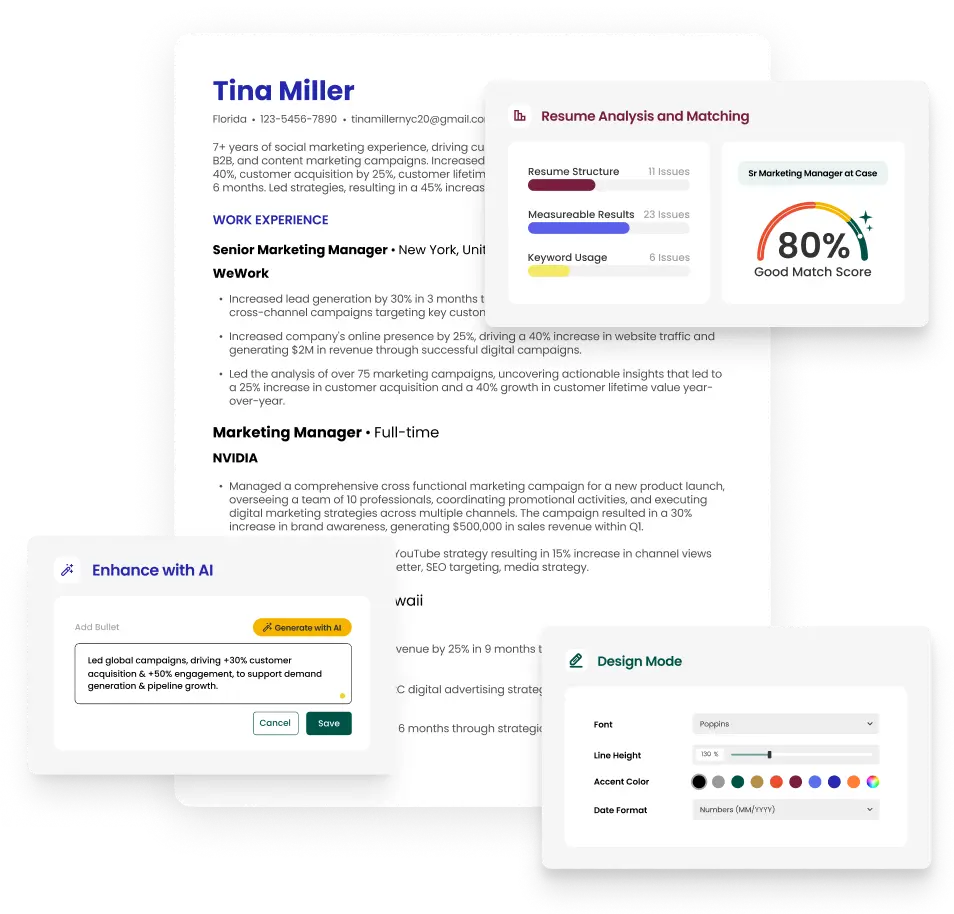
Build a Resume for Site Reliability Engineer

The resume builder that gets results.

  • Get clear feedback so you look as qualified as you are
  • Align your resume with the job to get further in the process, faster
  • Take the guesswork out of resume writing

Explore Related Job Searches

© 2026 Teal Labs, Inc
Privacy PolicyTerms of Service