Enterprise Architect Jobs

948 jobs found — updated daily

Principal Enterprise Architect

Wolters Kluwer•Wichita, KS

About The Position

The Principal Observability Architect provides enterprise technical thought leadership and strategic direction for the evolution of Monitoring & Observability capabilities. The role defines the enterprise strategy, future-state vision, target architecture, roadmap, standards, and transformation priorities to improve technology visibility, reliability, operational efficiency, and service quality. It is platform-agnostic and focuses on enterprise observability capabilities and outcomes rather than ownership of a specific monitoring product. The position leads enterprise modernization and transformation initiatives, establishes Observability Engineering and Enablement practices, and advances automation, event intelligence, AIOps, SRE, and reliability engineering. It promotes end-to-end visibility across applications, infrastructure, cloud, networks, databases, and service dependencies, and integrates observability with CMDB, ITSM, service mapping, incident management, configuration management, and automation. The role evaluates emerging technologies and vendors, develops executive-level strategies and business cases, influences technology direction across organizational boundaries, and leads complex initiatives involving multiple technology organizations and strategic partners. It also mentors architects, engineers, and technical leaders and promotes innovation, engineering excellence, and continuous improvement.

Requirements

  • Deep expertise in enterprise Monitoring & Observability strategy, architecture, engineering, and operations.
  • Strong understanding of metrics, logs, traces, events, synthetics, APM, infrastructure monitoring, network monitoring, database monitoring, and end-user experience monitoring.
  • Experience defining enterprise observability strategies, standards, operating models, and roadmaps.
  • Experience with major observability platforms and technologies such as Datadog, Splunk, Dynatrace, New Relic, Grafana, Prometheus, OpenTelemetry, Zabbix, SolarWinds, or equivalent.
  • Demonstrated experience leading enterprise technology transformation initiatives.
  • Ability to develop technology strategies, future-state visions, roadmaps, standards, and governance frameworks.
  • Proven ability to translate technical capabilities into measurable business and operational outcomes.
  • Experience driving organizational adoption and change across multiple technology teams.
  • Strong understanding of event management, event correlation, noise reduction, anomaly detection, and operational analytics.
  • Experience with AIOps, AI-enabled operations, or automated remediation.
  • Understanding of SRE principles, SLIs, SLOs, reliability engineering, and service health management.
  • Experience with automation, Infrastructure as Code, APIs, CI/CD, GitOps, or similar technologies.
  • Broad understanding of infrastructure, cloud, networking, databases, operating systems, virtualization, containers, and modern application architectures.
  • Experience with AWS and/or Azure environments.
  • Ability to engage credibly with infrastructure, application, cloud, security, architecture, and operations teams.
  • Strong understanding of ITSM and IT operations.
  • Experience integrating observability with CMDB, ServiceNow, service mapping, incident management, and automation platforms.
  • Understanding of how operational data can support broader service management and operational decision-making.
  • Exceptional communication and stakeholder management skills.
  • Ability to influence executives, architects, engineers, operations teams, and vendors.
  • Strong executive presence and strategic thinking, with the ability to operate at both strategic and technical levels.

Nice To Haves

  • Bachelor's degree in Information Technology, Computer Science, Engineering, or a related field.
  • 10 or more years of experience in infrastructure, operations, architecture, monitoring, observability, or related technology disciplines.
  • 5 or more years leading enterprise technology strategy or transformation initiatives.
  • Experience leading Monitoring & Observability modernization or transformation.
  • Experience with enterprise observability, AIOps, SRE, OpenTelemetry, or intelligent event management.
  • Relevant certifications in observability, cloud, architecture, automation, SRE, or ITIL.

Responsibilities

  • Serve as the enterprise technical thought leader for Monitoring & Observability.
  • Define enterprise vision, strategy, target-state architecture, roadmap, standards, principles, and transformation priorities for observability.
  • Drive the evolution from traditional monitoring and alerting toward full-stack observability and operational intelligence.
  • Evangelize modern observability practices across infrastructure, application, cloud, security, and operations organizations.
  • Lead enterprise modernization and transformation initiatives, including platform consolidation, tool rationalization, integration, automation, and adoption of emerging capabilities.
  • Develop and execute multi-year transformation roadmaps with measurable business and operational outcomes.
  • Identify opportunities to improve monitoring coverage, signal quality, operational efficiency, reliability, and cost, including transition strategies for legacy capabilities.
  • Lead technology evaluations, proofs of concept, vendor evaluations, and strategic platform decisions while maintaining a platform-agnostic perspective.
  • Establish an Observability Engineering and Enablement capability focused on standards, reusable patterns, automation, and self-service.
  • Define scalable onboarding approaches for applications, infrastructure, cloud platforms, and services; promote Observability as Code, Infrastructure as Code, APIs, CI/CD, and automation.
  • Establish enterprise standards for monitoring configuration, telemetry quality, alerting, dashboards, data retention, and lifecycle management.
  • Partner with engineering teams to embed observability into application and infrastructure delivery processes.
  • Define intelligent event management strategies for filtering, deduplication, enrichment, correlation, prioritization, and anomaly detection.
  • Evaluate and apply AI/AIOps capabilities; identify opportunities for predictive analytics, automated incident response, and automated remediation.
  • Establish governance and human oversight for AI-enabled operations and advance proactive, predictive, and increasingly automated operations.
  • Apply SRE and reliability engineering principles; define approaches for SLIs, SLOs, service health indicators, and reliability metrics.
  • Establish end-to-end visibility across applications, infrastructure, cloud, networks, databases, and service dependencies.
  • Use observability data to improve availability, performance, incident response, problem management, and continuous service improvement.
  • Define integration with CMDB, ITSM, service mapping, incident management, configuration management, and automation.
  • Use service and configuration context to improve event correlation, impact analysis, incident assignment, and root-cause analysis.
  • Help establish operational telemetry as a trusted source of information for technology operations and service management.
  • Maintain awareness of emerging observability, AI, automation, cloud, and reliability technologies and assess their enterprise value.
  • Establish technology standards and reference patterns supporting long-term enterprise strategy.
  • Develop executive-level strategies, roadmaps, business cases, and transformation recommendations.
  • Influence technology direction across organizational boundaries and align technical and business stakeholders.
  • Lead complex transformation initiatives involving multiple technology organizations and strategic partners.
  • Mentor architects, engineers, and technical leaders and promote innovation, automation, engineering excellence, and continuous improvement.

Benefits

  • Medical insurance
  • Dental insurance
  • Vision insurance
  • 401(k)
  • Flexible spending account (FSA) and health savings account (HSA)
  • Commuter benefits
  • Tuition assistance
  • Vacation and sick time
  • Paid parental leave
  • Bonus eligibility

Career Resources

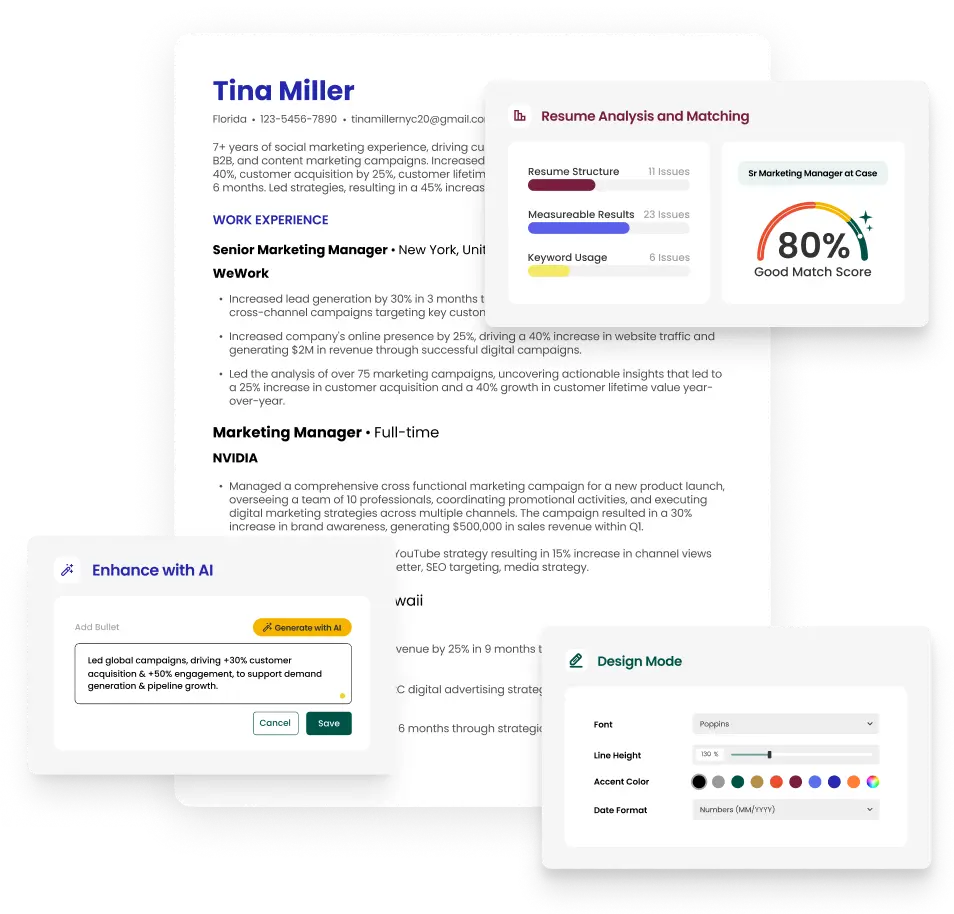
Build a Resume for Enterprise Architect

The resume builder that gets results.

  • Get clear feedback so you look as qualified as you are
  • Align your resume with the job to get further in the process, faster
  • Take the guesswork out of resume writing

Explore Related Job Searches

Frequently Asked Questions

Common questions about Enterprise Architect careers and jobs.

Based on current job postings on Teal, the average Enterprise Architect salary in the US is approximately $180,000 per year, with a typical range of $92,000 to $308,000.
© 2026 Teal Labs, Inc
Privacy PolicyTerms of Service