Fisheries Biologist Jobs

33 jobs found — updated daily

Environmental Protection Fisheries Biologist 1 (Marine) (35 Hour)

State of ConnecticutOld Lyme, CT
Hybrid

About The Position

The State of Connecticut Department of Energy & Environmental Protection (DEEP) is recruiting for an Environmental Protection Fisheries Biologist 1 in Old Lyme, CT. The Department is seeking an energetic, enthusiastic, and innovative person to help lead our marine fisheries-independent sampling programs into the future. The successful candidate will join a team of biologists conducting a variety of marine field sampling projects as part of the DEEP Marine Fisheries Program’s efforts to monitor the fish and invertebrate populations of Long Island Sound. The successful candidate will also participate in the technical aspects of the interstate marine fisheries management process as governed by the Atlantic States Marine Fisheries Commission (ASMFC). This position will be based out of our Old Lyme Marine District Headquarters, and will require a mix of field work, lab work, and office duties. The job will generally require 35 hours per week, with occasional overtime. Work schedule may vary according to fieldwork and meeting schedule demands. Fieldwork will require time spent at sea on a survey vessel for extended hours, sometimes in inclement weather.

Requirements

  • Six (6) years of experience in marine and/or anadromous fisheries management.
  • Fisheries management is defined as work requiring a knowledge of scientific fields such as biology, ichthyology, fisheries science, fish population dynamics, aquatic ecology, limnology, fish taxonomy, fishery statistics, aquatic entomology, aquatic phycology and oceanography.
  • Knowledge of principles and methods of fisheries management; environmental and human factors involved in production, management and harvesting of stocks of marine and anadromous fishes and invertebrates.
  • Interpersonal skills; oral and written communication skills.
  • Ability to conduct fishery surveys and oceanographic studies and apply statistical procedures necessary for sound conclusions; identify marine flora and fauna; utilize computer software.
  • Incumbents in this class must be willing and able to accept assignment or transfer to any area of the state.
  • Incumbents in this class may be required to live on a vessel for extended period of time.
  • Incumbents in this class may be required to travel.
  • Incumbents in this class may be required to possess and retain a valid Motor Vehicle Operator’s license.
  • Incumbents in this class must have adequate physical strength, stamina, physical agility, and visual and auditory acuity, and must maintain such physical fitness as to be able to perform the duties.
  • Incumbents in this class must be able to swim.

Nice To Haves

  • Experience planning, designing, and implementing fisheries-independent marine field surveys using bottom trawls.
  • Experience applying standardized scientific protocols for biological and environmental sampling and species-level identification of marine and estuarine fish and invertebrates
  • Experience processing and interpreting biological samples to determine fish life-history characteristics.
  • Experience working aboard fisheries survey vessels during extended sampling days in rain, wind, heat, cold, and rough sea conditions.
  • Experience managing fisheries data, conducting quality-assurance reviews, and performing statistical analyses using spreadsheets, databases, statistical software, or programming languages.
  • Experience preparing technical reports, scientific presentations, peer-reviewed manuscripts, and grant proposals.
  • Experience communicating scientific findings to fisheries-management organizations, scientific audiences, stakeholders, and the public.
  • Experience using geographic information system software to manage, analyze, and visualize fisheries and other geospatial data.

Responsibilities

  • Participate in planning, designing, and implementing fisheries-independent marine field surveys, including bottom-trawl and other fisheries sampling.
  • Serve as a crew member on larger survey vessels.
  • Collect biological and environmental data and samples using standardized scientific protocols.
  • Identify marine fish and invertebrates.
  • Maintain and repair fisheries field-sampling equipment.
  • Process and interpret biological samples to determine fish age and other life-history characteristics.
  • Assist in training and leading teams of seasonal resource assistants during field, laboratory, and office activities.
  • Enter data into electronic databases and perform data quality assurance and quality control procedures according to standardized protocols.
  • Manage, analyze, and visualize fisheries and other geospatial data using GIS software.
  • Perform statistical analyses of fisheries data.
  • Prepare annual reports summarizing sampling activities and routine data analyses.
  • Assist in developing grant proposals.
  • Serve as a member of technical committees of the Atlantic States Marine Fisheries Commission.
  • Represent the Department and engage with stakeholders in a variety of public venues.
  • Conducts studies of the life history, habits and rate of growth, recruitment and exploitation of marine and anadromous fishes and marine invertebrates.
  • Supervises the gathering and compilation of fishery statistics.
  • Analyzes and interprets statistical data for presentation.
  • Conducts limnologic and oceanographic studies for fishery conservation.
  • Determines the effect of sport and commercial fishing on various species and makes recommendations on the regulation of such fishing.
  • Gives testimony in court as an expert witness for the state.
  • Evaluates the results of artificial propagation of marine species.
  • Acts as custodian of scientific and utilitarian equipment and facilities.
  • May give talks to service clubs and other organizations.
  • Performs related duties as required.

Benefits

  • Professional growth and development opportunities.
  • A healthy work/life balance to all employees.

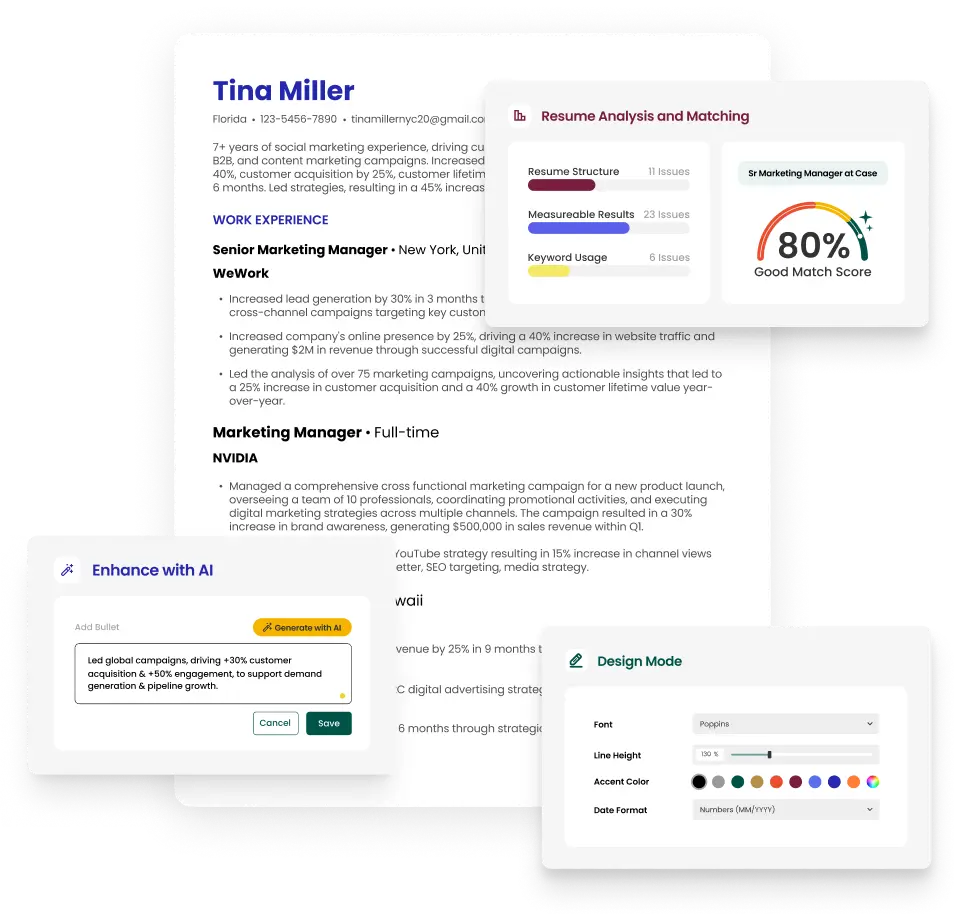
Build a Resume for Fisheries Biologist

The resume builder that gets results.

  • Get clear feedback so you look as qualified as you are
  • Align your resume with the job to get further in the process, faster
  • Take the guesswork out of resume writing

Explore Related Job Searches

Frequently Asked Questions

Common questions about Fisheries Biologist careers and jobs.

Based on current job postings on Teal, the average Fisheries Biologist salary in the US is approximately $80,000 per year, with a typical range of $46,000 to $170,000.
© 2026 Teal Labs, Inc
Privacy PolicyTerms of Service